The Baggage Claim Handbook: Deadlines, Forms, and Phone Numbers for Every Major US Carrier
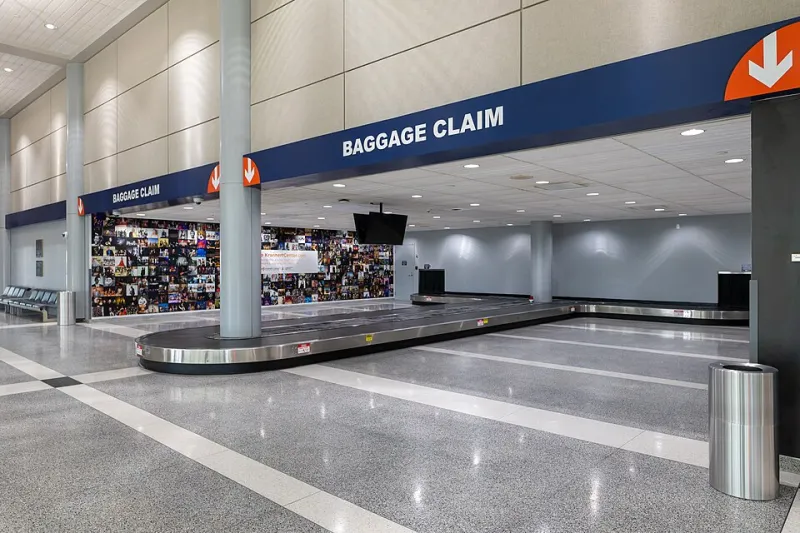
Photo: AviatorAuditor, CC0, via Wikimedia Commons
Roughly seven bags per 1,000 passengers are mishandled on US flights each year, according to Department of Transportation data. For the traveler standing at an empty carousel at 11 p.m. in Atlanta, statistics offer cold comfort. What does offer comfort is knowing exactly what to do in the next hour — because baggage claims are governed by hard deadlines that airlines enforce strictly.
This guide consolidates the reporting requirements, claim windows, and escalation paths for the ten busiest US carriers into a single reference.
The First Hour: File a Property Irregularity Report
Every airline, without exception, requires travelers to report missing baggage at the airport, before leaving the terminal. The document generated is called a Property Irregularity Report, or PIR. It contains a reference number that unlocks every subsequent step — online tracking, phone follow-ups, and compensation claims.
If you leave the airport without filing, you have created a significant problem. Some carriers will accept late reports, but under DOT rules an airline may deny a delayed bag claim if the report was not filed within a reasonable window — often interpreted as within hours of arrival. Always file in person before exiting baggage claim.
The Deadlines That Matter
Federal rules and airline contracts of carriage set distinct clocks for different scenarios. Missing any of them can forfeit your claim entirely:
- Delayed bags: Domestic bags are typically declared lost after 21 days without delivery (some airlines use 5 days for international flights under the Montreal Convention). Until then, the claim is classified as delayed.
- Damage claims: Passengers must report damage to the airline within 7 days of receiving the bag, in writing where possible.
- Lost bag compensation claims: Once a bag is declared lost, the passenger generally must submit a claim form — with receipts documenting the bag's contents — within 21 to 45 days, depending on the carrier.
The 21-day window is the one most travelers stumble over. Airlines are required to mail or email claim forms, but the burden of submission falls on the passenger. Mark the calendar the day your bag goes missing.
Compensation: What DOT Rules Guarantee
For domestic flights, the DOT caps airline liability for lost or damaged baggage at $3,800 per passenger (adjusted periodically). Airlines may not impose lower caps on domestic itineraries. International flights are governed by the Montreal Convention, which sets a cap denominated in Special Drawing Rights — roughly $1,700 at recent exchange rates.
Practical notes: airlines routinely require receipts for high-value items, and many exclude electronics, jewelry, and cash from full reimbursement under their contracts of carriage. Travelers with expensive gear should consider excess valuation coverage at check-in or a travel insurance policy with baggage protection.
Additionally, when a bag is delayed, most US carriers will reimburse "reasonable incidental expenses" — toiletries, a change of clothes — typically capped between $50 and $150 per day for one to three days. Submit those receipts promptly; these reimbursements expire quickly, sometimes within 30 days.
Carrier-by-Carrier Contact Essentials
While each airline publishes its own baggage service office details, the structure is consistent across the ten busiest US carriers — American, Delta, United, Southwest, Alaska, JetBlue, Spirit, Frontier, Hawaiian, and Allegiant:
- Airport baggage service office: Located in or near baggage claim; this is where the PIR is filed and where physical damage is inspected.
- Central baggage resolution center: A dedicated phone line, separate from general reservations, that handles tracing and claim status. These lines are dramatically less busy than main reservation numbers.
- Online tracing portal: All ten carriers offer status lookup using the PIR reference number, with updates usually posted within 24 hours.
A directory of each carrier's specific baggage office numbers, forms, and mailing addresses is maintained on our site for travelers who need direct contact details.
When the Baggage Office Goes Silent
The most common failure mode is not denial — it is silence. A claim is filed, a reference number exists, and then nothing happens for weeks. Escalation follows a predictable ladder:
- Written follow-up. Email the airline's baggage claims department, referencing your PIR number, and request a written status update. This creates a paper trail.
- Formal written claim. If the bag is past the lost threshold, submit the full compensation claim form with receipts, sent by a trackable method.
- Airline complaint channels. Every major carrier has a customer relations department separate from baggage services; complaints filed there receive higher-level review.
- DOT complaint. The Department of Transportation's Aviation Consumer Protection office accepts online complaints and requires airlines to acknowledge them within 30 days. This is the most effective escalation tool available to US travelers, and it is free.
One Last Prevention Note
Photograph the contents of your checked bag before you fly. A timestamped photo on your phone is the single most persuasive piece of evidence in a lost luggage claim — and it takes thirty seconds at the curb outside the terminal.