The Desk That Answers Before the Hold Music: How Airline Accessibility Lines Actually Work
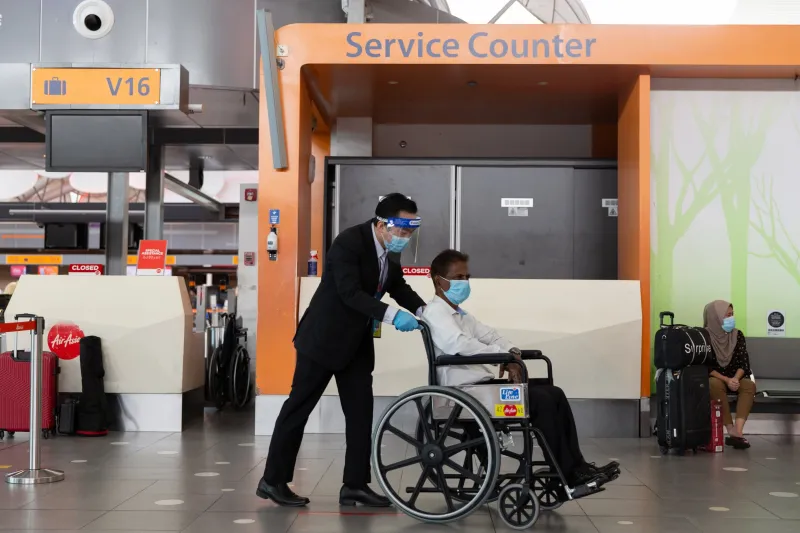
Photo: airline customer service agent helping traveler in wheelchair at airport, via images.squarespace-cdn.com
Most travelers with disabilities discover the accessibility desk the hard way: after a general reservations agent has already said no to something a special services agent would have approved in two minutes. The regular phone line is built to sell seats. The accessibility line is built to solve problems — and knowing the difference changes the entire booking experience.
Why the Regular Agent Keeps Saying No
Frontline reservations agents at American, Delta, United, and Southwest handle an enormous range of calls, but they operate within narrow scripting. Requests involving wheelchair service, medical equipment, or service animals typically require them to transfer the call — and transfers are where information gets lost.
The dedicated accessibility desks work differently. Agents there are trained on the Air Carrier Access Act (ACAA), the federal regulation that governs disability accommodations on US flights. They can:
- Add wheelchair assistance levels (the code system that ranges from door-to-door help to assistance only up the jet bridge)
- Register service animal documentation under the DOT Service Animal Air Transportation form requirements
- Coordinate stowage for battery-powered mobility devices, including lithium battery handling
- Pre-board travelers who need additional time, and annotate the reservation so gate agents see it
- Connect travelers with airline-specific medical review desks for stretchers, oxygen concentrators, or in-flight medical clearance
A general agent can often submit these requests. An accessibility agent can usually confirm them on the spot.
Finding the Right Number
Every major US carrier publishes its accessibility line separately from main reservations:
- Delta: the Delta Dedicated Phone Line for customers with disabilities
- United: the Accessibility Desk
- American: Reservations for customers with disabilities
- Southwest: a special services line integrated into their customer support structure
- Alaska, JetBlue, Spirit, and Frontier: each maintains a special services or accessibility contact listed in the help section of their websites
The numbers are rarely hidden — they're just not surfaced where most people look. On airline websites, they typically live in the accessibility section of the footer or under "Special Assistance," not in the main contact directory. Travelers who bookmark these lines alongside their confirmation codes save themselves an entire transfer chain later.
Timing matters as much as the number itself. Accessibility desks generally operate on extended but not 24-hour schedules, unlike main reservations lines. Calling during published hours — ideally mid-morning on a weekday — means shorter holds and more thorough conversations. A traveler needing an oxygen concentrator approved for a Friday departure should call no later than Wednesday.
Documentation Worth Having Before You Dial
Preparation separates a five-minute call from a forty-minute one. Have ready:
- The confirmation code and full name as ticketed. Accessibility notes attach to the reservation, not the traveler.
- The DOT service animal form for service animals — airlines require it for flights of eight hours or longer, and some accept it for shorter flights as well. Reliefa areas, animal size, and space requirements are all part of the conversation.
- Battery specifications for mobility devices. Agents will ask about battery type (wet cell, gel, lithium) and watt-hour ratings for power chairs. This information is usually printed on the battery itself.
- Medical clearance details if applicable. Passengers requiring oxygen or traveling within specific medical timeframes may need a physician's statement, which the accessibility agent will explain in precise terms.
None of this needs to be notarized or elaborate. What agents need is specificity — the difference between "I need wheelchair help" and "I can walk short distances but not through a terminal this size" determines which assistance code gets attached to the booking.
When the Accommodation Falls Through
Even a perfectly annotated reservation can unravel. A wheelchair doesn't arrive at the gate. A service animal seating assignment gets ignored. The jet bridge is broken and no alternative boarding path is offered.
Under the ACAA, airlines are obligated to provide these accommodations — and there is a defined escalation path:
- Start at the gate or airport customer service desk. State the accommodation that was confirmed on the reservation. Reservation notes are visible to airport staff, and a supervisor can often resolve the issue in minutes.
- Ask for the Complaint Resolution Official (CRO). Every US airline is required to have a CRO available at airports during operating hours — in person or by phone. The CRO has specific authority under federal regulation to make decisions about disability accommodations on the spot, including on the aircraft itself.
- Document everything. Names, times, and what was promised. If the CRO's resolution is unsatisfactory, travelers can file a complaint with the DOT's Office of Aviation Consumer Protection, which enforces the ACAA.
The accessibility desk itself remains useful after the flight, too. Follow-up calls to the same line create a paper trail within the airline's own system, which matters if a formal complaint becomes necessary.
A Directory Habit Worth Building
Frequent flyers with recurring accommodation needs should treat the accessibility desk the way elite travelers treat the premium line: as the first call, not the last resort. Save the numbers, note the operating hours, and call before booking rather than after when the itinerary involves complex needs — international connections, codeshare partners, or aircraft changes that affect equipment stowage.
At Airlines Office Connect, we keep current contact details for the accessibility and special services desks of every major US carrier in our directory, precisely because these lines deliver outcomes the general queue cannot. Reaching the right office faster isn't just a convenience. For travelers with disabilities, it's often the difference between a trip that works and one that never gets off the ground.